
Most deposit disputes are won or lost before the tenant has even unpacked.
That might sound counterintuitive. Disputes happen at the end of a tenancy, not the beginning. But the document that decides them is the property inventory report: the one adjudicators lean on, that deposit schemes weight most heavily, that determines whether a deduction is fair or a renter gets their money back.
Completed on day one. Before anyone has put a single box down.
If you're a letting agent, this is your most important piece of paperwork. If you're renting a property, it might be the most important thing you read before you move in.
What is a property inventory report?
A property inventory report is a written and photographic record of a rental property's condition at a specific point in time. Every room. Every wall. Every appliance, fixture, and piece of furniture the landlord is providing. All documented, with photos, before the tenancy begins.
Think of it as a photograph of the property's state on day one. At the end of the tenancy, the check-out report compares the property against that photograph. Anything that has changed beyond normal use can then be considered for a deposit deduction. Anything that was already there when you moved in cannot.
That last part matters enormously if you're renting. A thorough inventory report isn't just there to protect landlords. It protects you too. It's the document that stops you being charged for a stain that was already on the carpet when you arrived.
Why a property inventory report matters more than most people realise
The UK has three deposit protection schemes: MyDeposits, the Tenancy Deposit Scheme (TDS), and the Deposit Protection Service (DPS). When a dispute reaches one of these schemes, adjudicators need evidence. Not recollections. Not emails. Evidence.
An inventory report that is vague, unsigned, or light on photos will often be set aside entirely. When that happens, everyone loses. Landlords can't recover legitimate costs. Renters lose the paper trail that would have protected them from unfair claims. Agents lose credibility with both sides.
The stakes are real. Deposit disputes regularly involve hundreds of pounds and a great deal of stress. The quality of the inventory report at the start of the tenancy is almost always the deciding factor, for everyone in the room.
What a property inventory report should include
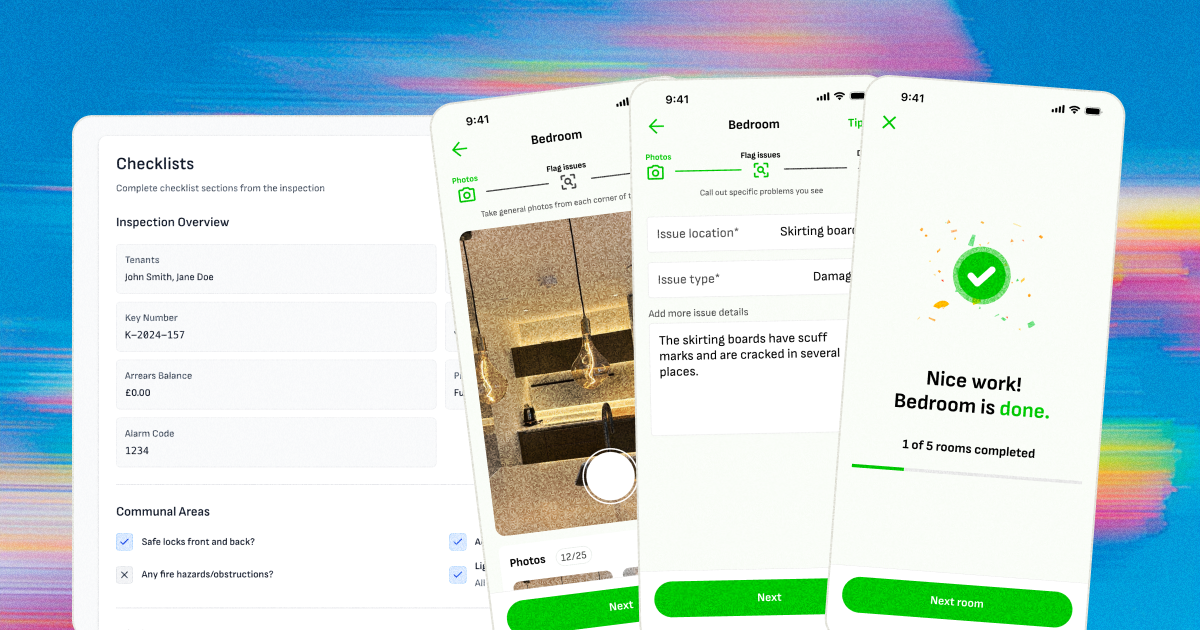
A thorough inventory report covers four things: the property's details, the condition of every room, photographic evidence, and signatures.
Property details. Full address, date and time of inspection, names of all tenants, meter readings for gas, electricity and water, and a record of what keys and fobs were handed over. Unglamorous, but important. Meter readings in particular are worth capturing carefully; utility disputes are a separate headache nobody wants.
Room by room condition. The report documents the condition of walls, ceilings, floors, doors, windows, fixtures, furniture, and appliances. Good inventory reports are specific. "Carpet in fair condition" is useless to everyone. "Three small marks on the north wall at skirting level, approximately 10cm above floor" is evidence, and evidence is what protects all parties.
Photographs. In many ways, photos matter more than anything written. Every room should have multiple shots. Any pre-existing damage should be captured up close. Meter readings should be photographed. Timestamps, either embedded in the file metadata or recorded by the software, carry real weight in adjudication. More photos is almost always the right call.
Cleanliness ratings. Each room should carry a cleanliness rating, typically running from professionally cleaned to poor condition. This matters most for one of the most common end-of-tenancy disputes: professional cleaning claims.
Tenant signature on a property inventory report: why it matters

This is where a lot of inventory reports fall down.
At check-in, the tenant should review the report and sign it, confirming they agree with what has been recorded, or noting anything they would like to add or dispute. A signed inventory report carries significantly more weight in any adjudication. An unsigned one is much easier to challenge.
If you're renting: read the inventory report carefully before you sign. Photograph anything you think has been missed. Note it in writing. This is not being difficult. It is being sensible. A good agent will actively encourage you to do exactly this.
The three property inventory reports across a tenancy
Most tenancies involve three distinct reports.
The check-in inventory report is the primary document: the baseline everything else is measured against, completed immediately before the tenant moves in.
The mid-term inspection is a lighter check, typically done every three to six months, to confirm the property is being maintained and catch any issues early.
The check-out report is completed as soon as the tenant vacates, ideally within 24 hours, and compared directly against the check-in inventory report to identify anything beyond fair wear and tear.
What fair wear and tear actually means

Fair wear and tear is the natural deterioration that happens through normal, everyday use. Landlords cannot charge tenants for this.
A carpet that's slightly flattened after two years of walking on it. Minor scuffs on walls in a busy hallway. Small nail holes from hanging pictures. Paintwork that has faded in a sunny room.
What falls outside fair wear and tear is a different matter. Burns on a carpet. Holes in walls. Broken locks or handles. Furniture that has been damaged rather than simply used.
The line is not always obvious, but a well-written inventory report at the start makes the comparison as clear as it can be for everyone, including the adjudicator asked to rule on it.
The length of the tenancy matters too. Ten years of wear looks different from six months. A good adjudicator will account for that. A good inventory report gives them the baseline to make that judgement fairly.
How much does a property inventory report cost?
This is one of the most common questions from both agents and renters, and the answer varies quite a bit.
Traditionally, letting agents either produced inventory reports in-house (paying in staff time rather than money) or outsourced them to a professional inventory clerk, which typically costs between £60 and £150 per property depending on size and location.
For renters, it is worth knowing that you should never be charged directly for a check-in inventory report. Under the Tenant Fees Act 2019, that cost cannot be passed on to tenants.
Wooma is free. There are no subscriptions and no per-property fees. Agents and clerks can produce a full inventory report at no cost, which changes the calculation considerably.
If you're a renter who wants to understand what a good inventory report looks like before your next move, the Wooma tenant app gives you a clear picture of what to expect and what to check.
How to complete a property inventory report
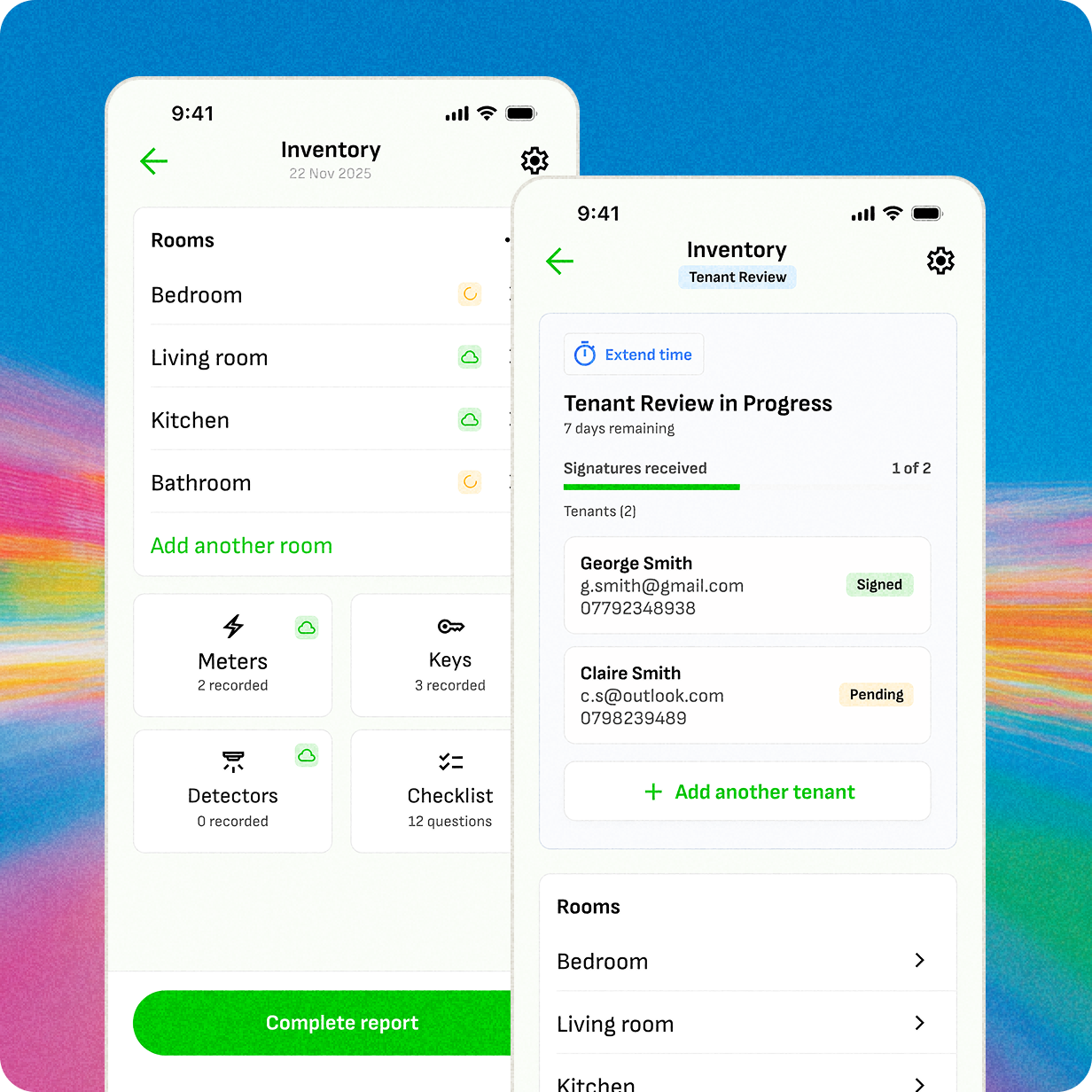
Not long ago, completing a property inventory report meant paper forms or Word documents: painstaking, slow, and almost impossible to compare consistently at check-out. Some agents still work this way.
Modern inventory software has changed this considerably. A full report that once took several hours can now be completed on a mobile device in 30 to 45 minutes. Photos are captured directly in the app with automatic timestamps. A professionally formatted PDF is ready the moment you're done. Reports are stored centrally and shared digitally with tenants for signature.
That is exactly what Wooma was built to do, and it's free. Just inventory software that works the way it should have always worked.
Why it all comes down to the inventory
A property inventory report done properly protects everyone: the landlord, the agent, and the renter. It removes ambiguity. It replaces arguments with evidence.
And it means that at the end of a tenancy, often a stressful moment for everyone involved, there is an objective record to refer to rather than a he-said-she-said argument nobody wins.
The hard part has always been producing one properly, every time, without it taking half a day. That's the problem Wooma solves. Try it free on your next inventory.
Frequently asked questions
What is the difference between a property inventory and a check-out report? A property inventory report (also called a check-in report) documents the condition of the property at the start of a tenancy. A check-out report documents its condition at the end, and is compared directly against the check-in inventory to identify any changes beyond fair wear and tear.
Is a landlord legally required to provide a property inventory report? There is no strict legal requirement in England and Wales to produce an inventory report, but without one a landlord or agent has no objective evidence to support a deposit deduction. Deposit protection schemes will almost always rule in the tenant's favour when evidence is absent or inadequate.
Can a tenant dispute an inventory report? Yes. At check-in, tenants should review the inventory report carefully and note any items they disagree with or believe have been missed. These notes should be submitted in writing, ideally within 24 to 48 hours of signing. Most agents using professional inventory software make this process straightforward.
How long should a property inventory report take? A thorough check-in inventory report for an average two-bedroom property typically takes 45 minutes to an hour when done manually. With dedicated inventory software like Wooma, the same report can be completed in 30 to 45 minutes, with photos timestamped and a formatted PDF generated automatically.
Who is responsible for arranging the property inventory report? The landlord or letting agent is responsible for arranging and funding the check-in inventory report. Under the Tenant Fees Act 2019, this cost cannot be passed on to tenants in England.